
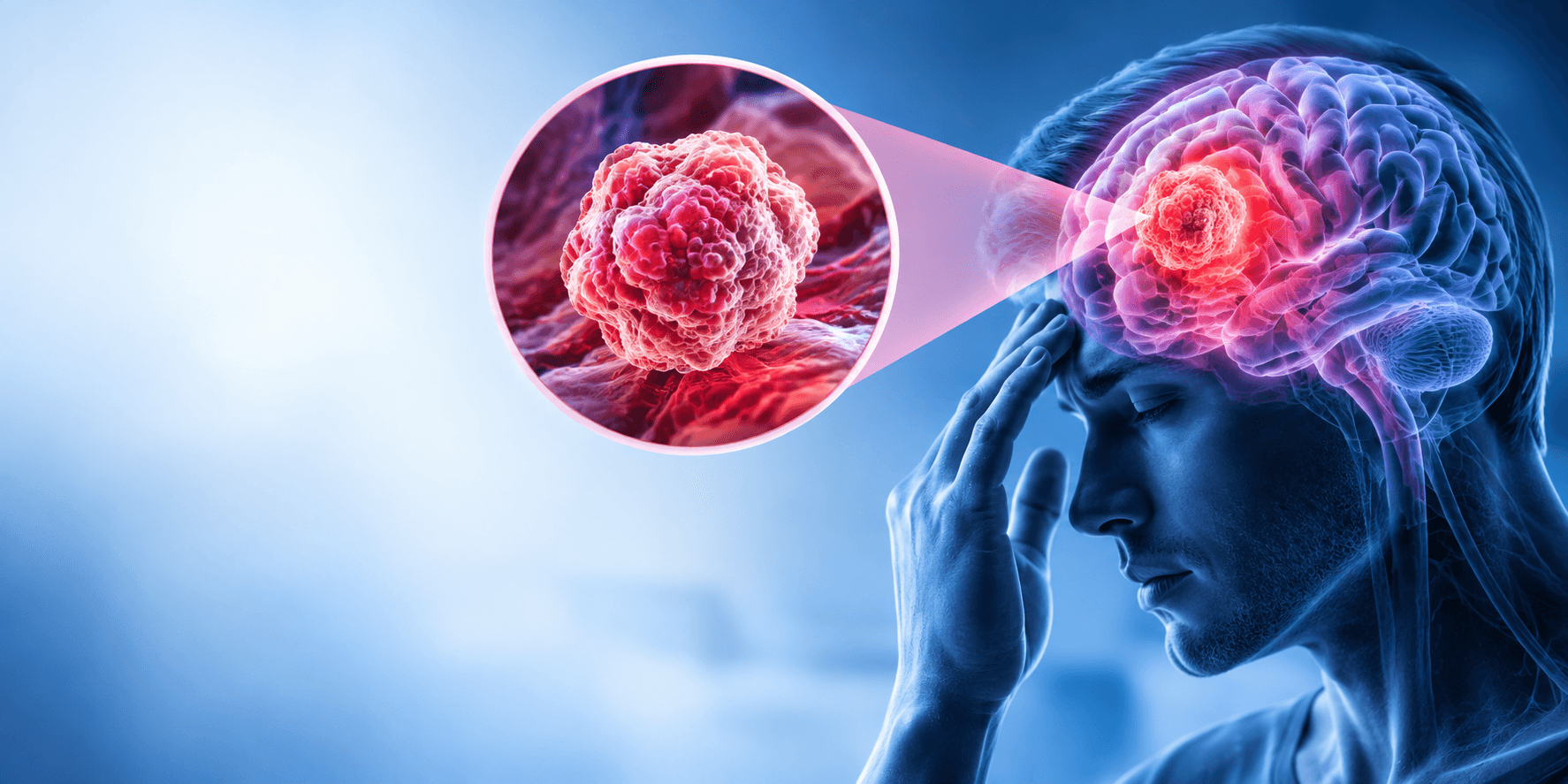
Brain Tumor: Symptoms, Causes, Diagnosis & Treatment
A brain tumor is a condition that requires timely medical evaluation and the right treatment approach. Understanding the early warning signs, possible causes, and available treatment options can help patients and their families make informed healthcare decisions.
Persistent headaches, unexplained seizures, vision changes, or problems with balance and speech should not be ignored, especially when these symptoms are new, recurring, or getting worse. However, these symptoms do not automatically mean that a person has a brain tumor. Several other medical conditions can cause similar problems.
In this article, we explain what a brain tumor is, its common symptoms, how it is diagnosed, and which treatment options may be considered.
What Is a Brain Tumor?
A brain tumor develops when abnormal cells grow in or around the brain. Depending on its location, size, and growth rate, it may affect important functions such as movement, memory, vision, speech, and coordination.
Brain tumors are broadly classified into two categories:
- Benign brain tumors: These are non-cancerous tumors. They often grow more slowly, but they can still cause serious problems by pressing on nearby brain tissue.
- Malignant brain tumors: These are cancerous tumors that may grow rapidly and invade surrounding brain tissue.
Brain tumors may also be classified as primary or secondary. Primary brain tumors begin in the brain or nearby tissues, while secondary brain tumors develop when cancer from another part of the body spreads to the brain.
Learn more about the different types of brain tumors from the National Cancer Institute.
Common Brain Tumor Symptoms
Brain tumor symptoms depend on the tumor's size, location, and rate of growth. Some symptoms develop gradually, while others may appear more quickly.
The common symptoms include:
- Persistent or worsening headaches: Headaches that become more frequent, more severe, or different from your usual pattern.
- Nausea and vomiting: These may occur alongside headaches or other neurological symptoms.
- Seizures: A seizure, particularly a first-time seizure, requires urgent medical assessment.
- Vision problems: Blurred vision, double vision, or loss of part of the visual field.
- Speech difficulties: Trouble finding words, speaking clearly, or understanding language.
- Weakness or numbness: Reduced strength or sensation in an arm, leg, or one side of the body.
- Balance and coordination problems: Difficulty walking steadily or coordinating movements.
- Memory and behavioural changes: Unusual confusion, difficulty concentrating, or changes in personality.
- Unusual sleepiness or dizziness: Particularly when persistent or accompanied by other neurological symptoms.
Important: A headache alone is usually not enough to identify a brain tumor. Most headaches are caused by other conditions. However, new, persistent, or progressively worsening symptoms should be evaluated by a qualified healthcare professional.
Read more about brain tumor symptoms and causes at Mayo Clinic.
What Causes a Brain Tumor?
In many cases, the exact cause of a primary brain tumor remains unknown. Brain tumors can occur in people of different ages, and having a brain tumor does not mean that someone has done something wrong.
Some factors that may increase the risk of certain brain tumors include:
- Exposure to high doses of ionizing radiation, such as certain forms of radiation therapy.
- Certain inherited genetic conditions that increase tumor risk.
- A personal medical history that may be relevant to secondary brain tumors, particularly a history of cancer elsewhere in the body.
It is important to understand that having a risk factor does not mean a person will develop a brain tumor. Likewise, many people diagnosed with a brain tumor have no known risk factors.
There is currently no established method that guarantees prevention of brain tumors. If you have concerns about your personal or family medical history, discuss them with a qualified doctor.
How Is a Brain Tumor Diagnosed?
Accurate diagnosis is essential because different types of brain tumors require different treatment approaches. A doctor considers the patient's symptoms, medical history, examination findings, and diagnostic test results.
Common diagnostic methods include:
1. Neurological Examination
The doctor may assess muscle strength, reflexes, vision, hearing, balance, coordination, memory, and other neurological functions.
2. MRI Scan
Magnetic Resonance Imaging (MRI) provides detailed images of the brain and can help identify the location, size, and characteristics of a suspected tumor.
3. CT Scan
A Computed Tomography (CT) scan uses X-rays to produce images of the brain. It may be used in emergencies or when rapid assessment is needed.
4. Biopsy and Laboratory Testing
In selected cases, a biopsy is performed to obtain a small tissue sample for examination. Laboratory analysis helps establish the tumor type and may identify characteristics that guide treatment decisions.
Not every patient requires every test. The treating specialist determines which investigations are appropriate based on the individual case.
For additional information, visit the National Cancer Institute's guide to brain tumor diagnosis and treatment.
Brain Tumor Treatment Options
There is no single treatment suitable for every brain tumor. The treatment plan depends on several factors, including the tumor's type, grade, location, size, growth pattern, symptoms, and the patient's overall health.
Depending on the diagnosis, treatment may include the following:
1. Brain Tumor Surgery
Surgery may be recommended to remove as much of the tumor as can be safely removed, reduce pressure on surrounding brain tissue, or obtain a tissue sample for diagnosis.
The surgical approach depends on the tumor's location and its relationship with important areas of the brain. In some cases, complete removal may not be possible without risking neurological function.
2. Radiation Therapy
Radiation therapy uses carefully directed high-energy radiation to destroy tumor cells or control their growth. It may be recommended after surgery or as part of the main treatment for certain tumors.
3. Chemotherapy
Chemotherapy involves medicines that destroy cancer cells or slow their growth. Its use depends on the tumor type and the treatment plan recommended by the specialist.
4. Targeted Treatment and Other Medicines
Certain tumors may benefit from targeted medicines or other specialised treatments. Medicines may also be prescribed to manage symptoms such as seizures or swelling around the tumor.
5. Regular Monitoring
Some slow-growing tumors that are not causing significant symptoms may be monitored with regular examinations and imaging instead of immediate treatment.
The most appropriate treatment plan must be individualised. Patients should discuss the expected benefits, possible risks, alternatives, and follow-up requirements with their treating specialist.
More information is available from the NHS guide to malignant brain tumor treatment.
When Should You Seek Medical Attention?
Do not ignore neurological symptoms that are unusual, persistent, or becoming progressively worse. Timely assessment can help doctors identify the underlying cause and determine whether further investigation is needed.
Seek emergency medical care immediately if you experience:
- A sudden, extremely severe headache.
- A first-time seizure.
- Sudden weakness or numbness, especially on one side of the body.
- Sudden difficulty speaking, severe confusion, or loss of consciousness.
- Sudden loss of vision or other severe neurological changes.
These symptoms can also indicate other serious emergencies, including a stroke. Do not wait for symptoms to resolve on their own.
Can a Brain Tumor Be Treated Successfully?
The outcome varies considerably from one patient to another. Some benign tumors can be treated successfully, while certain malignant tumors require a combination of treatments and long-term follow-up.
The prognosis depends on factors such as:
- The type and grade of the tumor.
- Its location and size.
- Whether it can be safely removed.
- The patient's age and general health.
- How the tumor responds to treatment.
Early medical evaluation does not guarantee a particular outcome, but it helps specialists make timely and informed decisions about diagnosis and care.
Brain Tumor Care at Pink Star Hospital, Jaipur
If you or a family member is experiencing persistent headaches, unexplained seizures, vision changes, or other concerning neurological symptoms, seeking an appropriate medical evaluation is an important step.
At Pink Star Hospital, Jaipur, patients can seek medical guidance for brain and spine-related concerns and discuss suitable diagnostic and treatment options with the relevant specialist.
To learn more about the hospital and its services, visit the official Pink Star Hospital website.
Frequently Asked Questions (FAQs)
1. What are the early signs of a brain tumor?
Early signs may include persistent or worsening headaches, seizures, vision changes, balance difficulties, speech problems, or changes in memory and behaviour. Symptoms vary depending on the tumor's location and type.
2. Does every headache indicate a brain tumor?
No. Headaches commonly occur because of migraines, tension headaches, dehydration, sleep problems, and many other conditions. A headache that is new, persistent, progressively worsening, or accompanied by neurological symptoms should be evaluated by a doctor.
3. Are all brain tumors cancerous?
No. Brain tumors may be benign (non-cancerous) or malignant (cancerous). Even benign tumors can require treatment if they press on important brain structures or cause symptoms.
4. Which scan is commonly used to detect a brain tumor?
MRI is commonly used to obtain detailed images of the brain. A CT scan may also be used in specific situations. The doctor decides which scan is appropriate based on the patient's symptoms and clinical condition.
5. Can a brain tumor be treated without surgery?
Yes, in selected cases. Depending on the tumor, treatment may involve monitoring, radiation therapy, chemotherapy, targeted medicines, or other approaches. Surgery is not necessary for every patient.
6. Which specialist should I consult for suspected brain tumor symptoms?
Depending on the symptoms, a neurologist or neurosurgeon may be appropriate. A qualified doctor can assess the condition and arrange further investigations or referrals when needed.
Conclusion
Brain tumors are complex conditions, but understanding the warning signs and available treatment options can help patients take informed steps towards medical care.
Do not self-diagnose or ignore persistent neurological symptoms. Seek medical advice when symptoms are unusual, recurring, or worsening, and follow the treatment plan recommended by a qualified healthcare professional.
Medical disclaimer: This article is intended for general educational purposes only and should not replace professional medical advice, diagnosis, or treatment. Always consult a qualified healthcare professional for individual medical concerns.