
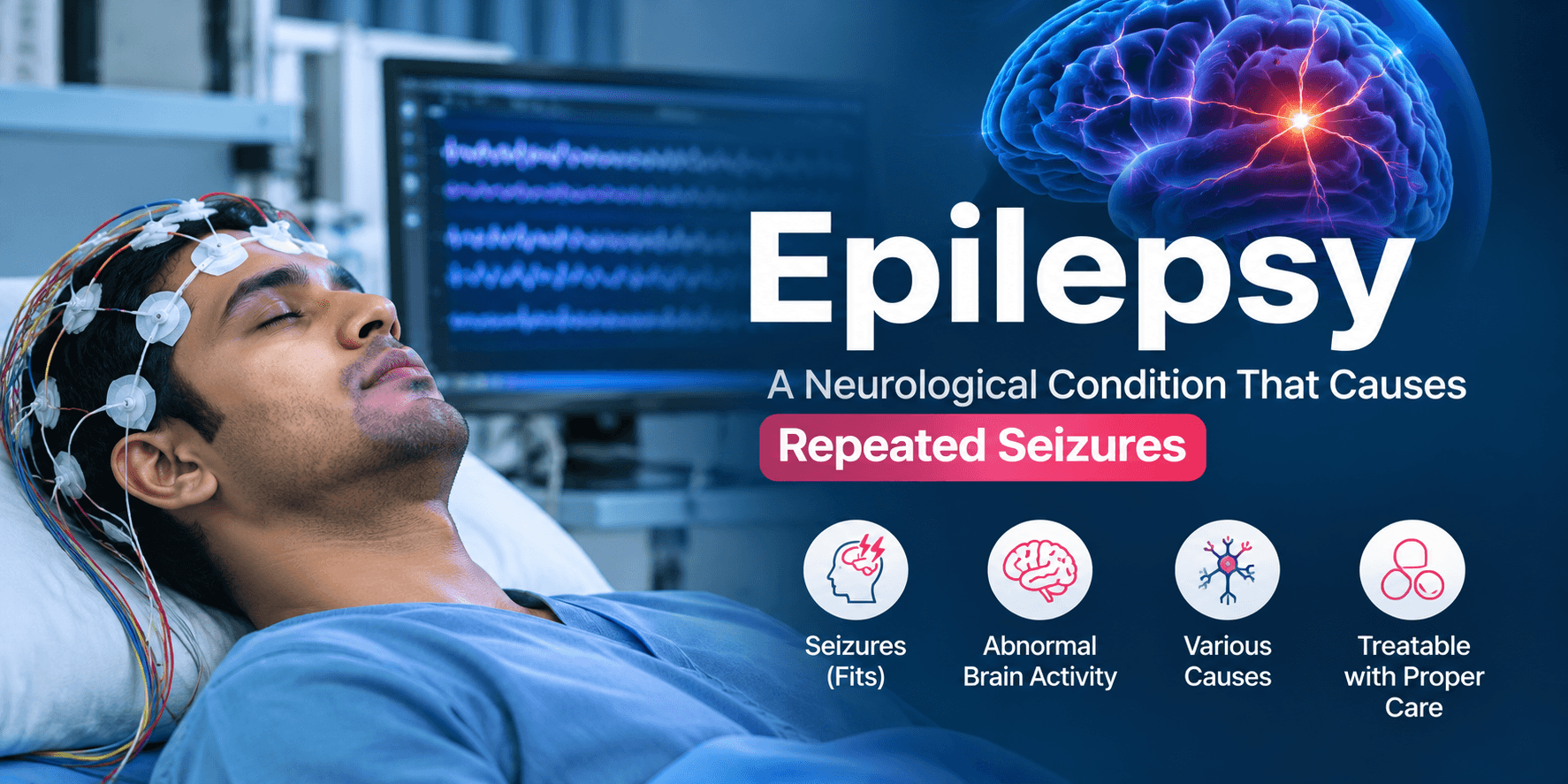
Epilepsy is a neurological condition that affects the brain and can cause repeated seizures. It can affect children, adults and older people. Although epilepsy is a common neurological disorder, a lack of awareness and misconceptions often prevent people from seeking timely medical attention.
A seizure may involve sudden jerking movements, temporary loss of consciousness, staring episodes, unusual sensations or changes in behaviour. However, not every seizure looks the same, and not every person who experiences a seizure has epilepsy.
If you are searching for epilepsy treatment in Jaipur, understanding the symptoms, causes, diagnosis and available treatment options is an important first step.
At Pink Star Hospital, Mansarovar Extension, Jaipur, the Department of Neuroscience provides neurological evaluation and comprehensive care for conditions affecting the brain, spine and nervous system, including epilepsy and seizure disorders.
Explore our Department of Neuroscience in Jaipur.
What Is Epilepsy?
Epilepsy is a chronic neurological disorder characterised by a tendency to experience recurrent, unprovoked seizures.
A seizure occurs when there is sudden abnormal electrical activity in the brain. This temporary disturbance can affect movement, awareness, sensation, behaviour and other brain functions.
Depending on the area of the brain involved, a person may experience anything from brief staring episodes to involuntary body movements and loss of consciousness.
According to the World Health Organization (WHO), approximately 50 million people worldwide live with epilepsy. With appropriate diagnosis and treatment, up to 70% of people with epilepsy could become seizure-free.
Epilepsy is not contagious, and people living with this condition can lead productive and fulfilling lives with proper medical care.
What Are the Common Symptoms of Epilepsy?
Epilepsy symptoms vary depending on the type of seizure and the part of the brain affected.
Some common symptoms include:
1. Sudden Jerking Movements
A person may experience involuntary jerking or stiffening of the arms, legs or entire body.
2. Temporary Loss of Consciousness
Some seizures can cause a person to lose awareness or consciousness temporarily.
3. Blank Staring Episodes
A person may suddenly stop responding, stare into space and remain unaware of their surroundings for a few seconds.
4. Confusion After a Seizure
After a seizure, some people experience temporary confusion, drowsiness, headache or difficulty remembering what happened.
5. Unusual Sensations
Some people experience unusual smells, tastes, visual disturbances, sudden fear or a strange sensation in the stomach before a seizure.
6. Sudden Falls
Certain seizures can cause a sudden loss of muscle control, resulting in unexpected falls or injuries.
7. Changes in Behaviour or Awareness
A seizure may cause temporary changes in speech, emotions, movements or awareness.
Important: Not all epileptic seizures involve shaking or falling. Some may be subtle and difficult to recognise.
What Causes Epilepsy?
Epilepsy can develop due to different factors affecting the brain.
Common possible causes include:
- Head injuries: Severe traumatic brain injuries can damage brain tissue and increase the risk of epilepsy.
- Genetic factors: Certain genetic conditions can increase the likelihood of developing epilepsy.
- Brain infections: Conditions such as meningitis and encephalitis may contribute to seizure disorders.
- Stroke: Brain damage resulting from a stroke can sometimes lead to epilepsy.
- Brain tumours: Certain brain tumours may cause abnormal electrical activity.
- Birth-related brain injuries: Lack of oxygen or other complications around birth can increase the risk of epilepsy.
- Developmental and neurological conditions: Certain conditions affecting brain development can be associated with epilepsy.
In some people, the exact cause cannot be identified even after medical evaluation.
What Are the Different Types of Epileptic Seizures?
Seizures are broadly classified according to where abnormal electrical activity begins in the brain.
1. Focal Seizures
Focal seizures begin in one specific area or network within the brain.
Symptoms may include unusual sensations, involuntary movements, sudden fear, changes in awareness or repetitive movements.
Some people remain fully aware during a focal seizure, while others experience impaired awareness.
2. Generalised Seizures
Generalised seizures involve networks on both sides of the brain from the beginning.
Common types include:
- Tonic-clonic seizures: May involve body stiffening, rhythmic jerking movements and loss of consciousness.
- Absence seizures: Brief episodes of staring and reduced awareness, often lasting only a few seconds.
- Myoclonic seizures: Sudden, brief muscle jerks.
- Tonic seizures: Sudden muscle stiffening.
- Atonic seizures: Sudden loss of muscle tone, sometimes causing falls.
3. Unknown-Onset Seizures
Sometimes the beginning of a seizure is not witnessed or cannot be clearly identified. In such cases, it may initially be classified as an unknown-onset seizure.
A neurologist can help determine the seizure type through clinical assessment and appropriate investigations.
How Is Epilepsy Diagnosed?
Correct diagnosis is important because different seizure conditions may require different treatments.
A doctor may recommend the following investigations:
1. Neurological Examination
The doctor evaluates medical history, previous episodes, medications, family history and neurological symptoms.
Information from someone who witnessed the seizure can be particularly helpful.
2. EEG Test (Electroencephalogram)
An EEG records the electrical activity of the brain using small electrodes placed on the scalp.
It helps identify abnormal electrical patterns associated with epilepsy and supports seizure classification.
3. MRI Brain
An MRI scan provides detailed images of brain structures and may help identify abnormalities such as tumours, structural changes or previous brain injuries.
4. CT Brain
A CT scan may be recommended, particularly in emergency situations, to identify bleeding, significant injuries or other structural abnormalities.
5. Blood Investigations
Blood tests may be recommended to identify metabolic problems, infections, electrolyte disturbances or other conditions that may contribute to seizures.
A normal EEG does not automatically rule out epilepsy. Diagnosis is based on the overall clinical assessment and investigation findings.
What Is the Treatment for Epilepsy?
Epilepsy treatment depends on the type of seizure, its cause, the patient's age, medical history and response to previous treatment.
The main objective is to control seizures, prevent injuries and improve quality of life.
1. Anti-Seizure Medications
Anti-seizure medicines are commonly used to prevent or reduce seizures.
The choice of medicine depends on the seizure type and individual patient factors.
Patients should take their prescribed medication regularly and never discontinue it suddenly without medical advice.
2. Lifestyle Modifications
Certain lifestyle habits can help people with epilepsy manage their condition.
Important recommendations include:
- Maintain a regular sleep schedule.
- Avoid sleep deprivation.
- Take prescribed medicines on time.
- Avoid alcohol when advised by your doctor.
- Identify and manage personal seizure triggers.
- Avoid skipping meals if this affects your condition.
- Attend regular neurological follow-up appointments.
3. Epilepsy Surgery
Some patients continue to experience seizures despite trying appropriate anti-seizure medications.
These patients may be evaluated for epilepsy surgery at a specialised centre.
Surgery may be considered when the seizure-producing brain area can be identified and safely treated. It is not suitable for every patient.
4. Dietary Therapy
A medically supervised ketogenic diet may help certain patients, particularly some children with difficult-to-control epilepsy.
It should only be followed under the guidance of an experienced medical team and dietitian.
5. Long-Term Monitoring
Regular medical follow-up helps evaluate treatment effectiveness, monitor side effects and adjust medication when necessary.
What Should You Do When Someone Has an Epileptic Seizure?
Knowing basic seizure first aid can help prevent injuries and protect someone's safety.
If someone experiences a seizure, follow these steps:
1. Stay Calm
Remain with the person and note when the seizure starts.
2. Protect Them From Injury
Move nearby sharp, hard or dangerous objects away. If possible, place something soft under their head.
3. Do Not Restrain Their Movements
Never try to hold their arms or legs down during the seizure.
4. Do Not Put Anything in Their Mouth
Never place fingers, spoons, water, medicines or any other object inside their mouth.
5. Turn Them Onto Their Side
When possible, gently position the person on their side, especially after the convulsive movements stop, to help maintain an open airway.
6. Stay Until They Recover
Remain with the person and allow them time to regain awareness.
When Is a Seizure a Medical Emergency?
Call emergency medical services immediately if:
- The seizure lasts five minutes or longer.
- Another seizure begins before the person fully recovers.
- It is the person's first known seizure.
- The person has difficulty breathing or does not regain consciousness normally.
- The person is seriously injured during the seizure.
- The seizure occurs in water.
Prolonged seizures can become life-threatening and require immediate medical treatment.
Can Epilepsy Be Cured?
Epilepsy is a manageable neurological condition, and many patients achieve good seizure control with appropriate treatment.
According to WHO, up to 70% of people living with epilepsy could become seizure-free with appropriate use of anti-seizure medication.
Some patients may eventually be considered for medication withdrawal after a sustained period without seizures. However, this decision must be made by a qualified doctor after evaluating the patient's individual risk.
Never stop epilepsy medication independently, even if seizures have not occurred for a long time.
What Happens If Epilepsy Is Left Untreated?
Untreated or poorly controlled epilepsy can increase the risk of several complications.
These may include:
- Physical injuries due to falls.
- Accidents during seizures.
- Difficulty with daily activities.
- Emotional stress and social challenges.
- Problems with memory and concentration in some patients.
- Prolonged seizures or status epilepticus.
- Increased risk of serious complications.
Early diagnosis and appropriate treatment can help reduce these risks.
Epilepsy Treatment in Mansarovar, Jaipur at Pink Star Hospital
Finding appropriate neurological care is an important step for anyone experiencing repeated seizures or symptoms of epilepsy.
Pink Star Hospital, located in Mansarovar Extension, Jaipur, provides comprehensive neurological evaluation and management through its Department of Neuroscience.
The hospital's neuroscience services cover brain, spine and nervous system disorders, including epilepsy, seizure disorders, stroke, brain tumours and other neurological conditions.
Neurological Services at Pink Star Hospital
Patients may receive medical evaluation and care involving:
- Neurological consultation and examination.
- EEG investigation for evaluation of seizure disorders.
- MRI Brain and CT Brain imaging.
- Medical management of epilepsy and seizures.
- Evaluation for selected epilepsy surgery cases.
- Neurocritical care and emergency neurological assessment.
- Long-term neurological follow-up.
The treatment approach depends on the patient's symptoms, diagnosis and individual medical requirements.
Experienced Neurosurgery Team
Pink Star Hospital's Neuroscience Department includes experienced neurosurgeons, including:
Dr. Rajvinder Singh Choudhary
Senior Consultant Neurosurgeon
MBBS, MS (General Surgery), M.Ch (Neurosurgery)
15+ Years of Experience
The appropriate specialist and treatment pathway will depend on the patient's clinical condition. Epilepsy medication management and seizure classification generally require assessment by a neurologist, while selected patients may need neurosurgical evaluation.
Explore our Neuroscience Department and Meet Our Specialist Doctors.
Why Early Neurological Evaluation Matters
Early medical assessment can help identify the type of seizure, understand possible underlying causes and determine the appropriate treatment approach.
If you or a family member experiences repeated seizures, unexplained episodes of lost awareness or unusual involuntary movements, do not delay seeking medical advice.
Pink Star Hospital is located in Mansarovar Extension, Jaipur, Rajasthan, providing multispeciality healthcare and neurological services.
For medical consultation and appointment assistance:
Hospital: Pink Star Hospital
Location: Mansarovar Extension, Jaipur, Rajasthan
24×7 Emergency Helpline: +91 82909 02526
Website: https://www.pinkstarhospital.com/
Frequently Asked Questions About Epilepsy
1. What are the first signs of epilepsy?
Early signs may include sudden staring episodes, unusual sensations, involuntary muscle jerks, temporary loss of awareness, unexplained falls or sudden changes in behaviour.
2. Can epilepsy occur at any age?
Yes. Epilepsy can develop at any age, although it is frequently diagnosed during childhood and older adulthood.
3. Is epilepsy a mental illness?
No. Epilepsy is a neurological disorder caused by abnormal electrical activity in the brain. It is not a mental illness and is not contagious.
4. Can a person with epilepsy live a normal life?
Yes. Many people with epilepsy lead active and productive lives with appropriate treatment, regular medical follow-up and suitable safety precautions.
5. Which test is used to diagnose epilepsy?
EEG is commonly used to record brain electrical activity. MRI Brain, CT Brain, blood tests and detailed clinical evaluation may also be recommended.
6. Can epilepsy be treated without surgery?
Yes. Most people with epilepsy are initially treated with anti-seizure medications. Surgery is considered only for selected patients who do not respond adequately to appropriate medication.
7. What should I avoid if I have epilepsy?
Avoid missing prescribed medication, sleep deprivation and personally identified seizure triggers. Follow medical advice regarding alcohol, driving, swimming, working at heights and other safety-sensitive activities.
8. Where can I get epilepsy treatment in Jaipur?
Pink Star Hospital, Mansarovar Extension, Jaipur, provides neurological evaluation and epilepsy management through its Department of Neuroscience. Patients can seek medical consultation for seizure-related symptoms and appropriate treatment guidance.
Conclusion
Epilepsy is a neurological condition that requires awareness, accurate diagnosis and appropriate medical treatment. With timely evaluation and the right treatment plan, many people with epilepsy can achieve good seizure control and maintain a healthy lifestyle.
Recognising seizure symptoms, understanding seizure first aid and avoiding misconceptions can make a significant difference in the lives of patients and their families.
If you notice repeated seizures, unexplained episodes of lost awareness or unusual movements, seek medical evaluation without delay.
Pink Star Hospital, Mansarovar, Jaipur, encourages early neurological consultation and informed healthcare decisions for better brain health.
Medical Disclaimer: This article is intended for general educational purposes only and should not replace professional medical advice, diagnosis or treatment. Always consult a qualified neurologist or healthcare professional for individual medical guidance.